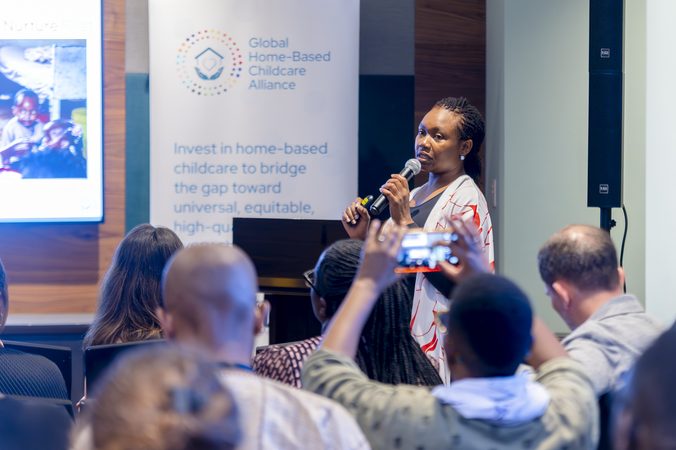
Dr. Gacheri Njogu-Ndongwe, CEO of NurtureFirst.
At the Investing in the Early Years: Global Technical Financing Forum in Kigali, Rwanda in May, seven organisations across four continents co-founded the Global Home-Based Childcare Alliance, a coalition mobilising financing and advancing global policy for home-based childcare. The Alliance is built on evidence, grounded in provider realities, and aimed at strengthening the systems that have long overlooked the world’s most common form of early childhood care.
On 8 May 2026, at the Forum convened by Early Childhood Development Action Network (ECDAN) in Kigali — a high-level gathering of donors, development banks, and policymakers — founding members from Bangladesh, Colombia, Kenya, South Africa, the United Kingdom, the United States, and Vietnam formally launched the Alliance. Its work is organised around two focus areas: global advocacy, to shift how decision-makers understand and resource home-based childcare; and knowledge brokering, to exchange evidence, best practices, and scalable models across countries and contexts to advance home-based childcare.
Dr. Gacheri Njogu-Ndongwe, CEO of NurtureFirst, opened with a striking image: formal early childhood development is just the visible tip of the iceberg. Below the waterline, unseen by the systems built to finance early childhood development, sits home-based childcare — where most of the world’s youngest children actually are, cared for by millions of women whose work enables other mothers to study and work. The Alliance, she said, exists to bring what’s below the surface into view.
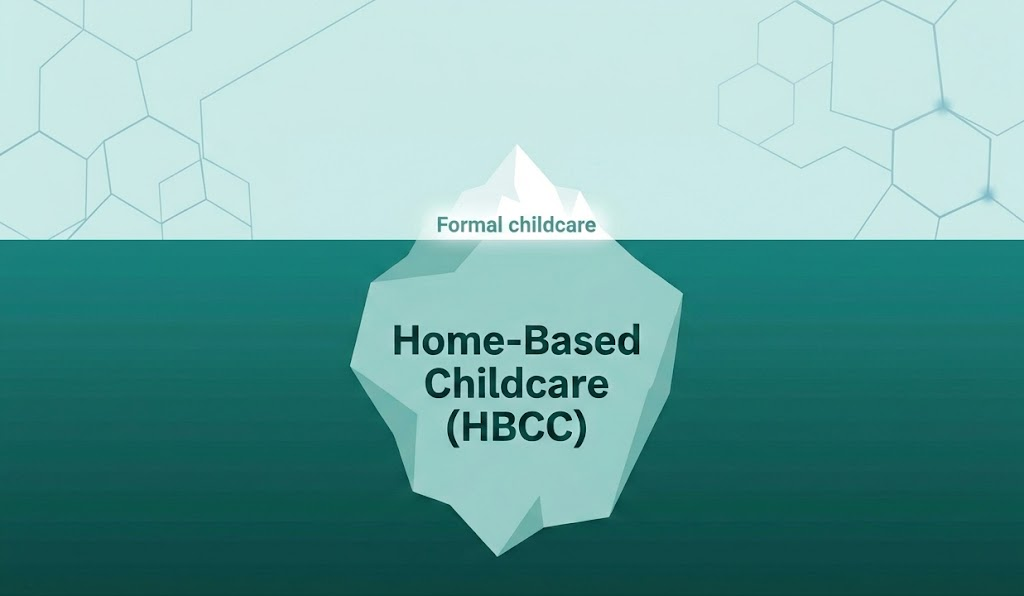
That invisibility was the highlight of the launch opening, complemented by a video address from Joan Lombardi, Adjunct Professor and Principal Advisor, Stanford Center for Early Childhood:
“Every morning, in cities and villages across the world, a woman opens the door of her home. One by one, the children arrive — toddlers, infants, small ones — whose parents are already on their way to work. She feeds them. She holds them. She teaches them. She watches them grow. Her name might be Aisha in Nairobi. Maria in Bogotá. She represents millions of women managing with very little, providing care that is trusted, affordable, and culturally rooted, and almost entirely invisible to the systems built to finance early childhood development.”
— Joan Lombardi, Adjunct Professor and Principal Advisor, Stanford Center for Early Childhood
Is There Evidence?
Each founding member shared data across contexts which confirmed that home-based childcare already operates at scale and, when supported, it delivers measurable results for children, women, and communities.
South Africa
In South Africa, 40% of all early learning programmes are home-based, yet children in these settings remain systematically underserved. Data from the Department of Basic Education shows that 66% of children in the lowest income quintile have no access to early learning, compared to 36% in the highest income quintile. SmartStart, a founding member from South Africa, is working to close that gap. An independent evaluation of 551 children across 325 SmartStart programmes found that over eight months, the share of children developmentally on track rose from 45% to 65%, and the achievement gap between low- and high-income households narrowed from 25 percentage points to just six. SmartStart now supports 15,000 practitioners across all nine provinces, reaching more than 160,000 children every week.
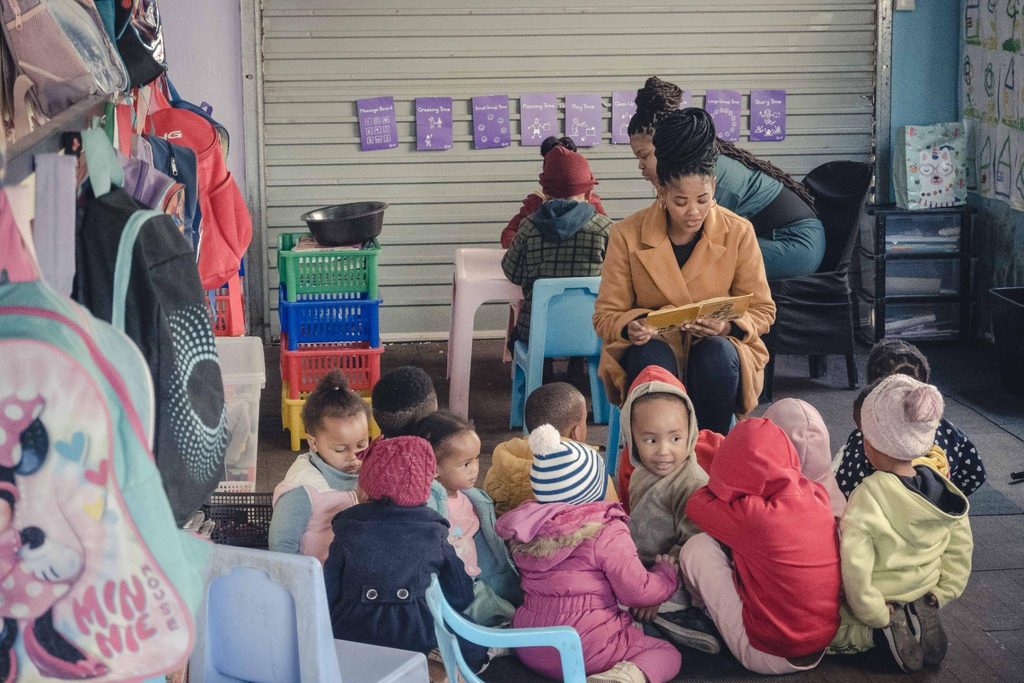
SmartStart early learning story time in South Africa. Image: SmartStart.
Bangladesh
In Bangladesh, 73% of low-income urban women cite lack of childcare as the primary barrier to workforce participation, and 55% of working urban mothers lack childcare support. BRAC Institute of Educational Development‘s home-based childcare programme has trained 455 care entrepreneurs, supporting 1,820 children. Evaluation findings show significant gains: children’s development scores across motor, language, and cognitive domains improved; care entrepreneurs’ knowledge and practice scores increased; and the self-esteem of care entrepreneurs rose from 58.3% to 84.5%.
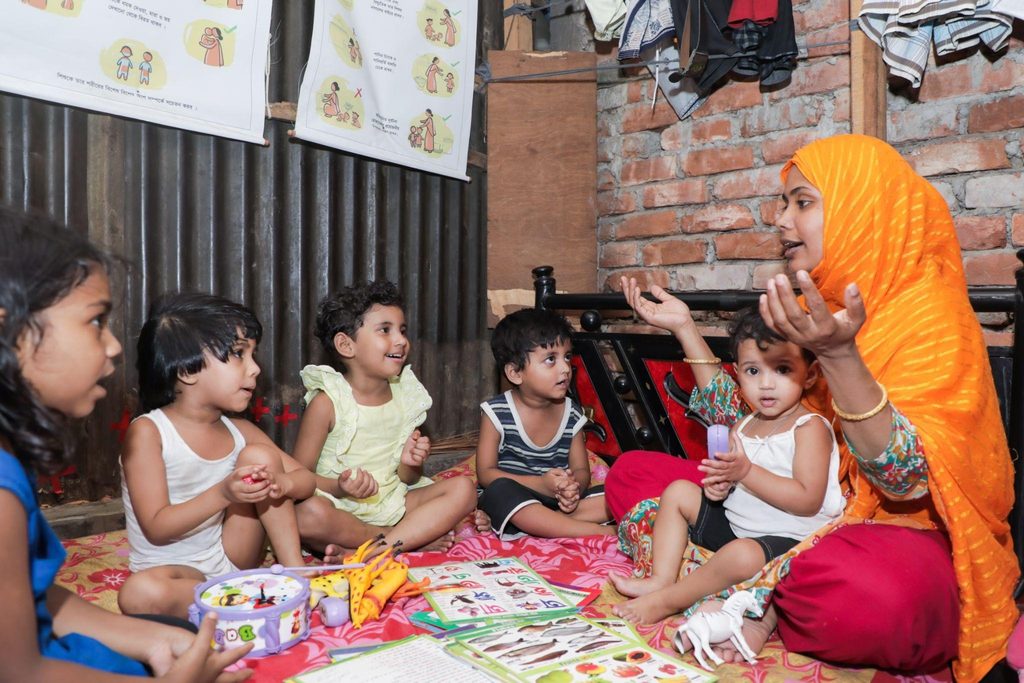
Care entrepreneur engaging children in play-based learning (Bangladesh). Image: BRAC IED.
Vietnam
In Vietnam, 17,400 independent childcare centres serve 550,000 children under six, filling the gap between a six-month maternity leave policy and a public kindergarten system that only accepts children from 36 months, and then only if families have household residency status. OneSky works across the country’s 433 industrial zones, where 4.6 million migrant factory workers, mostly women, need safe, quality childcare that matches factory shift hours. From 2018 to 2025, OneSky trained 2,543 teachers and caregivers across four provinces, improving the quality of care and learning for more than 53,990 young children. By 2030, OneSky aims to reach 4,000 additional centres and 100,000 more children.
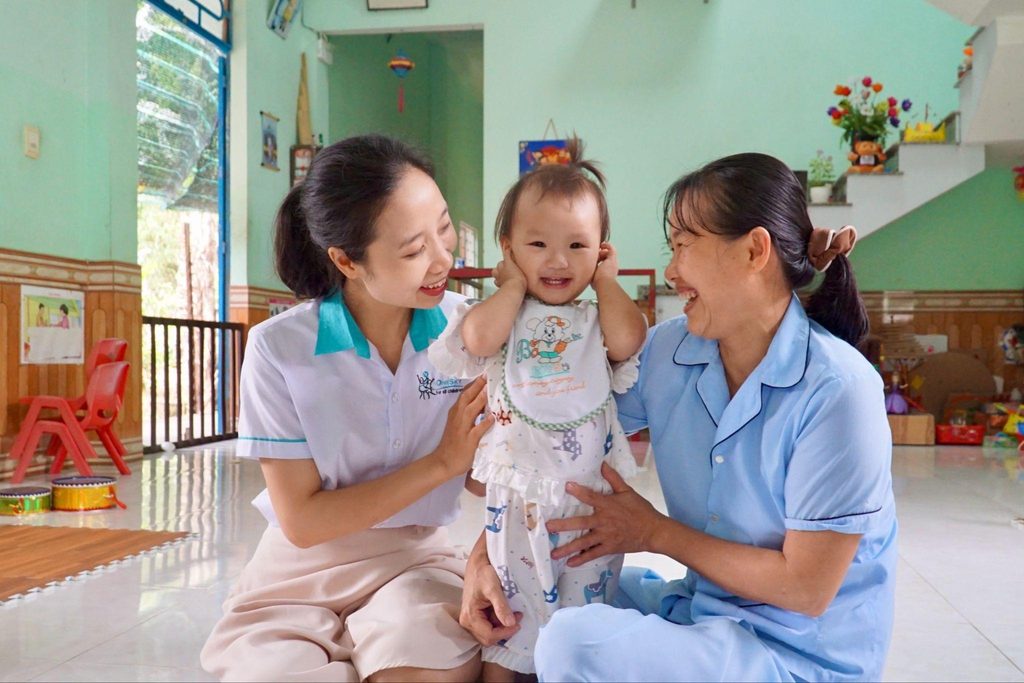
Caregivers laugh with a child in a home-based childcare setting in Vietnam. Image: OneSky.
Kenya
In Kenya, NurtureFirst — co-founder of the Alliance and its Secretariat — estimates 273,500 home-based childcare providers nationwide who care for more than 1,641,500 children across the country. To understand their operational realities and support needed, NurtureFirst mapped more than 5,000 home-based childcare providers across three of Kenya’s 47 counties, caring for approximately 22,000 children. Of those mapped, 93% had never received any formal training. Working through partner organisations, NurtureFirst has supported the training of over 500 providers, helped establish sub-national and national provider associations that now engage county governments directly on policy, and influenced Kenya’s draft National Children’s Policy to explicitly recognise home-based childcare.
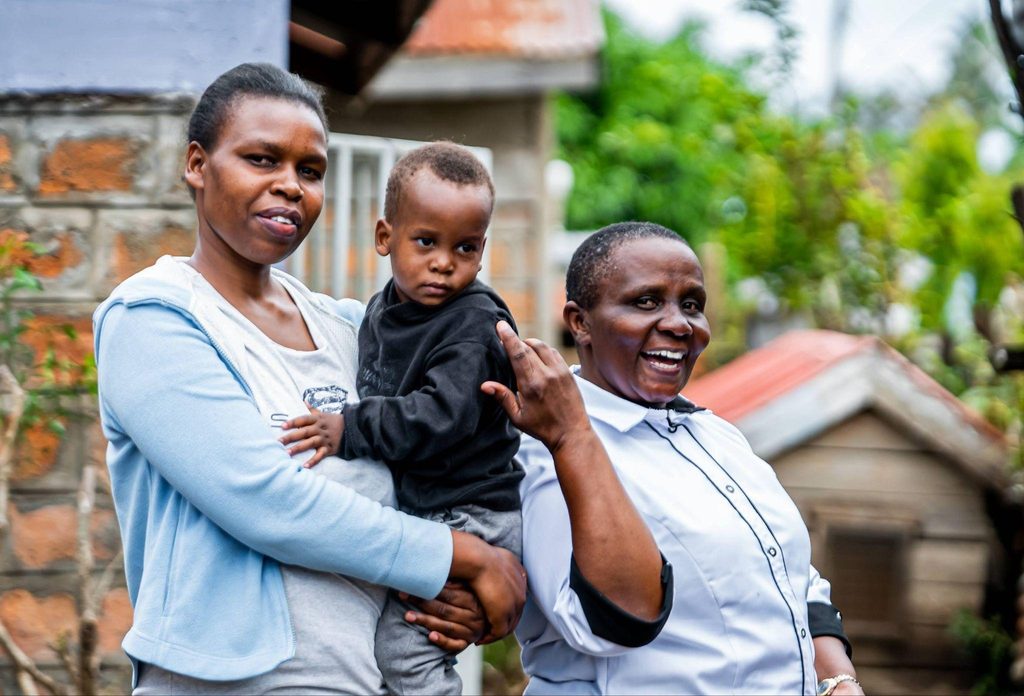
Mother holding her child next to the HBCC Provider who cares for her child in Kisumu County, Kenya. Image: NurtureFirst.
Colombia
In Colombia, roughly 2.1 million of the country’s 4.5 million children under five are missing out on early childhood education. aeioTU set out to understand what’s actually happening in that gap, researching Bogotá, Antioquia, and Bolívar and finding that an estimated 203,700 children are being cared for in home-based settings by approximately 52,231 caregivers. Their Care Economy initiative is now bringing those children into view: across the initiative’s two cohorts in 2026, 382 caregivers were engaged and 266 completed certification, reaching 1,042 children across three territories in Colombia. Through ERP del Cuidado, aeioTU is also strengthening the information infrastructure behind home-based childcare, enabling caregivers to register children, document their development, and generate data that can support better decisions about quality, care, and early childhood services.
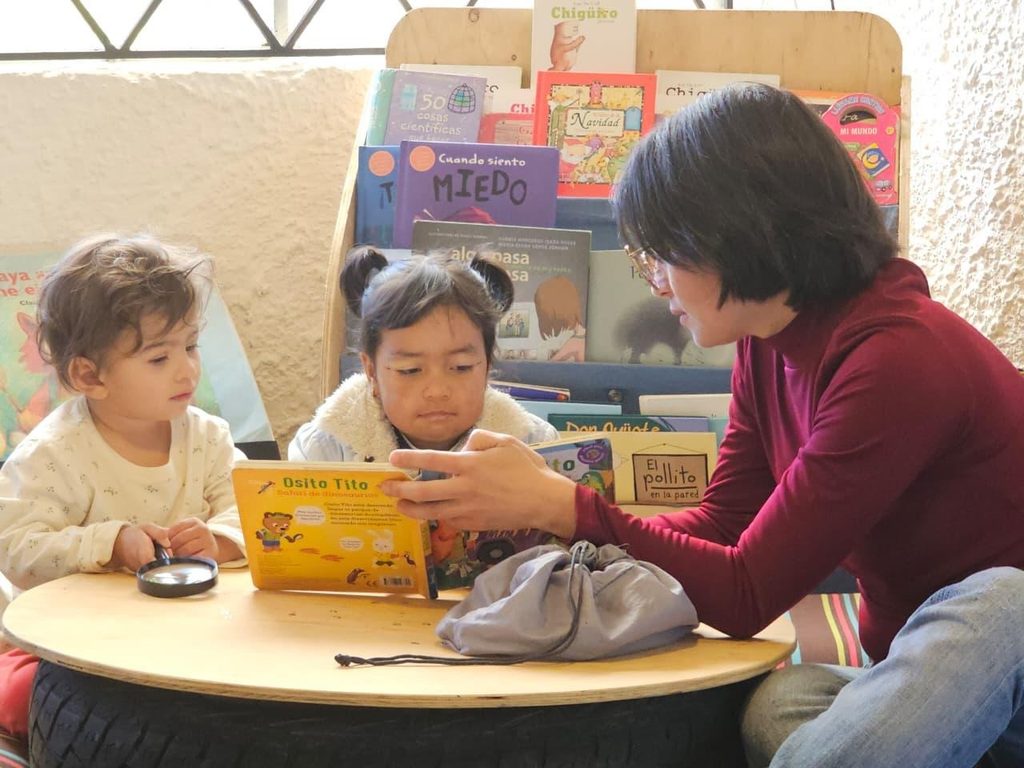
Khalilah Ochoa, caregiver in aeioTU’s Childcare Ecosystem Transformation project in Colombia. Image: aeioTU.
United States
Approximately six million children are in home-based childcare settings in the United States each year, and it is widely relied upon for infants and toddlers, families with non-traditional work hours, rural communities, and immigrant families. National Association for Family Child Care (NAFCC) has supported home-based childcare educators for more than 40 years and has seen a material difference on caregivers’ earning potential. For instance, NAFCC’s EmpowerHer Business Accelerator programme increased home-based childcare educators’ earnings by $10,000.

A home-based childcare educator plays with children outside in the United States. Image: NAFCC.
United Kingdom
In the United Kingdom, tiney has built a technology platform that supports 1,383 registered childminders and more than 15,000 children across 147 English local authorities. Home-based childcare is essential for many families: 54% of tiney children live in the most-deprived half of neighborhoods, and 96% of parents say their childminder makes a meaningful contribution to their child’s development and school readiness. Further, the average tiney childminder earns over £43,000 working flexibly from home, versus about £29,400 for a full-time nursery worker.
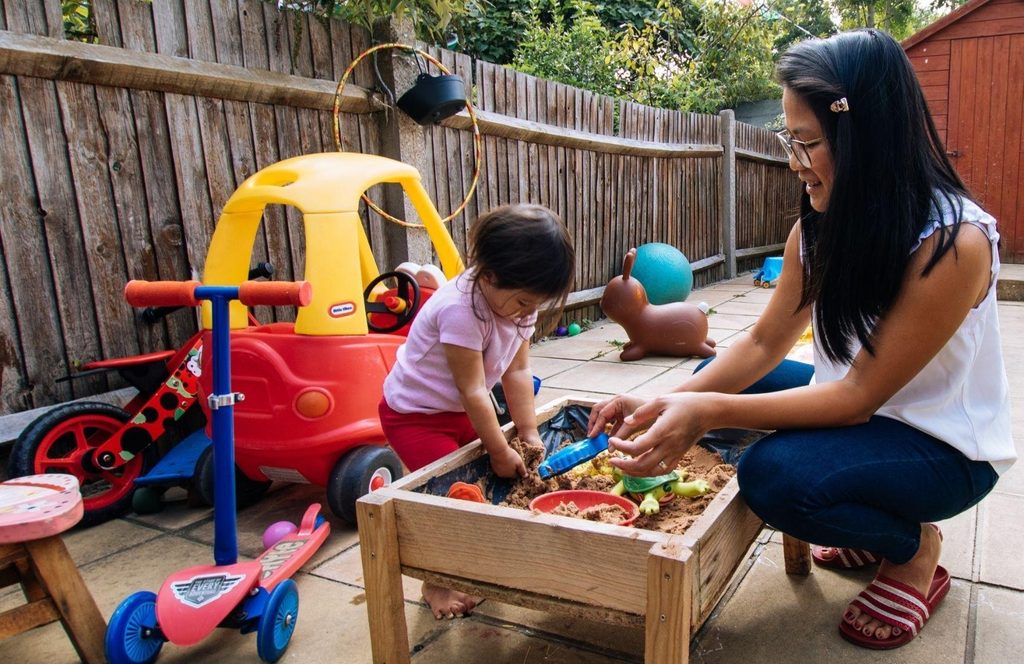
Marie’s tiney home nursery in the United Kingdom. Image: tiney.
Essential Childcare Infrastructure
Elizabeth Lule, Executive Director of ECDAN and well known leader in the ECD financing community, hosted the conference and framed the stakes in her keynote. Referring to home-based childcare, she said:
“This [home-based childcare] is not a niche; this is not a gap filler. This is the dominant reality of early care for the families we most need to reach — and it receives almost no dedicated public financing anywhere in the world.”
— Elizabeth Lule, Executive Director, ECDAN
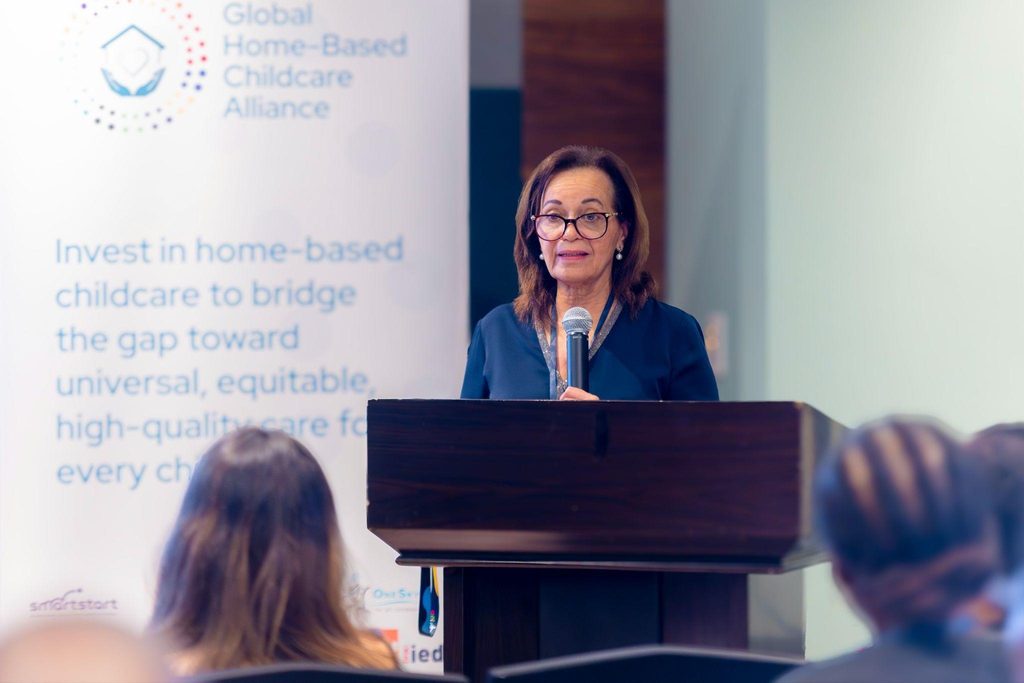
She described the millions of women who provide this care as “invisible to the systems we have built to finance the early years” — and called on the Alliance to ensure that home-based childcare is included in national budgets, development finance, and global commitments, including influencing the 2027 International Finance Summit for Early Childhood.
Tressa Johnson, Director of Programs at ELMA Philanthropies, made the case for philanthropic investment:
“This is not a scale problem. Scale exists here. What is missing is visibility. The system needs data.”
— Tressa Johnson, Director of Programs, ELMA Philanthropies
She argued that philanthropy’s core role is to take on risk: the willingness to dream big enough to believe policymakers can be reached, the work can be made visible, and the children themselves can be made visible.
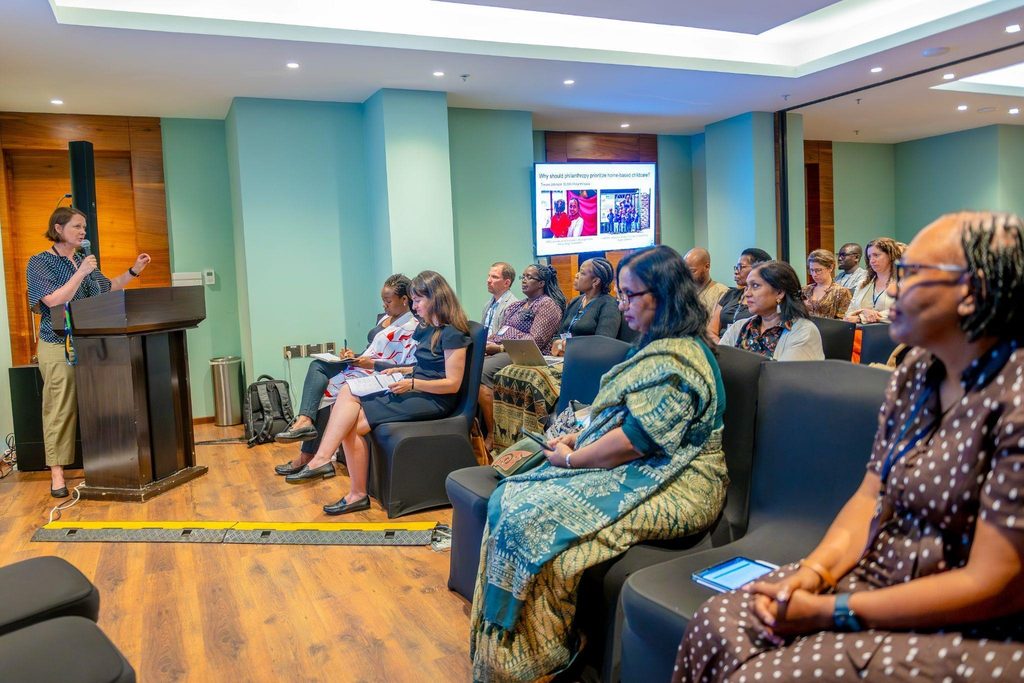
Tressa Johnson, Director of Programs, ELMA Philanthropies
The Hard Questions
After the presentations, Grace Matlhape, CEO of SmartStart and a founding member of the Alliance, invited the room explicitly to voice skepticism about home-based childcare. The responses were exactly the kind of challenge the Alliance will need to answer convincingly and repeatedly as it grows.
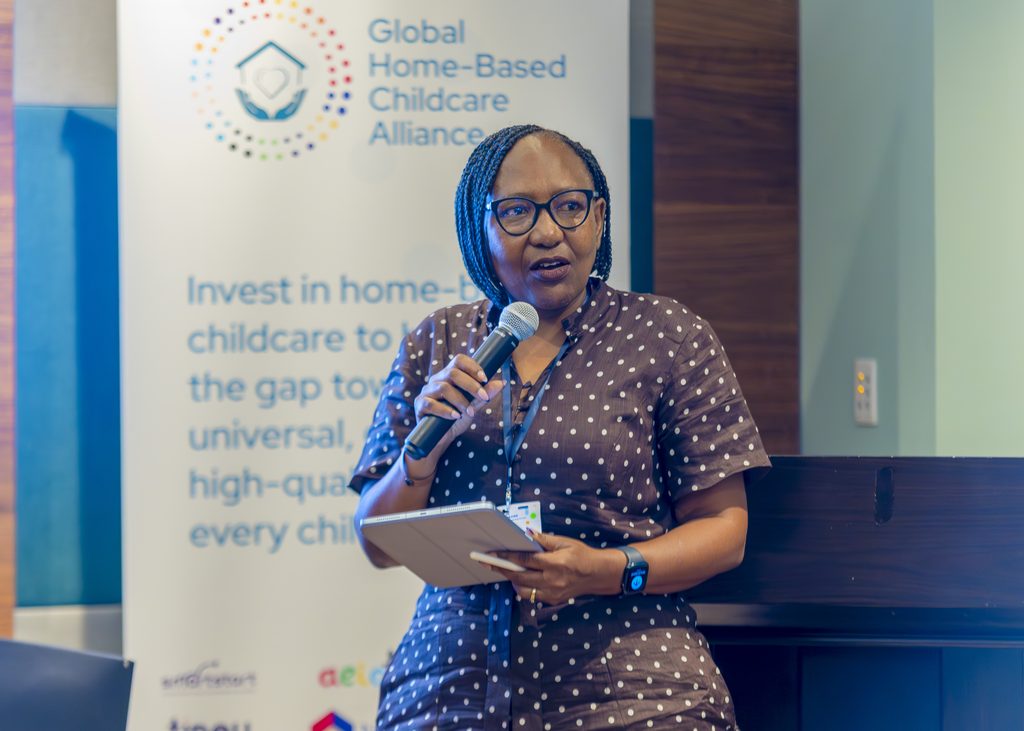
Dr Yaa Adoma Dwomo-Fokuo, a paediatrician from Ghana, called for comparative developmental data: assessments of children in home-based care measured against those in formal centres. The founding members agreed — and noted that this is precisely why every introductory presentation led with evidence.
Giselle, a participant from Rwanda, asked whether home-based childcare models risk reinforcing the assumption that childcare is women’s work. Gacheri Njogu-Ndongwe, CEO of NurtureFirst, acknowledged the tension directly:
“If we get to a point where this is a paid job, paid income, then it doesn’t matter that it’s a woman’s job, because the women are earning. But the problem I have is when it’s a woman’s job that then gets undervalued, and then underpaid — which is what we are campaigning against.”
— Gacheri Njogu-Ndongwe, CEO, NurtureFirst
Tracy Koske, Childcare Project Manager at WIEGO, raised the question of child protection: how do you ensure safeguarding in someone’s home? The response from the panel was clear: registration and recognition are what make protection possible. As Gacheri put it: “We’re not asking to expand home-based childcare. We are recognising that it exists. How do we make it safer?”
Victoria Arciniegas Gomez, CEO of aeioTU, added from Colombia’s experience: “We’re not trying to standardise someone’s home. We’re really trying to understand what happens inside someone’s home.”
Martha Odundo, Director in Charge of ECD at Kenya’s Ministry of Education, raised the legal accountability question: in a country driven by law and policy, who is responsible when a child is in home-based care? Grace Matlhape pointed to South Africa’s journey — six years of advocacy that culminated, the day before the Alliance’s launch, in cabinet approval of a new Children’s Act that formally recognises home-based childcare.
“The idea is not to work outside of the law. The idea is to make sure that the law works for the people of its country.”
— Grace Matlhape, CEO, SmartStart
A Government Steps Forward
Patrine Banda, Acting Director of Early Childhood Education at Zambia’s Ministry of Education, spoke on behalf of her government with a directness that captured the room:
“Where were you? Where were we, that we wait until our children are left and unattended to?”
— Patrine Banda, Ministry of Education, Zambia
She confirmed Zambia’s intention to join the Alliance as a government member — a signal that the coalition is not limited to civil society and philanthropy, but extends to the policymakers whose decisions ultimately determine whether home-based childcare is financed and supported at scale.
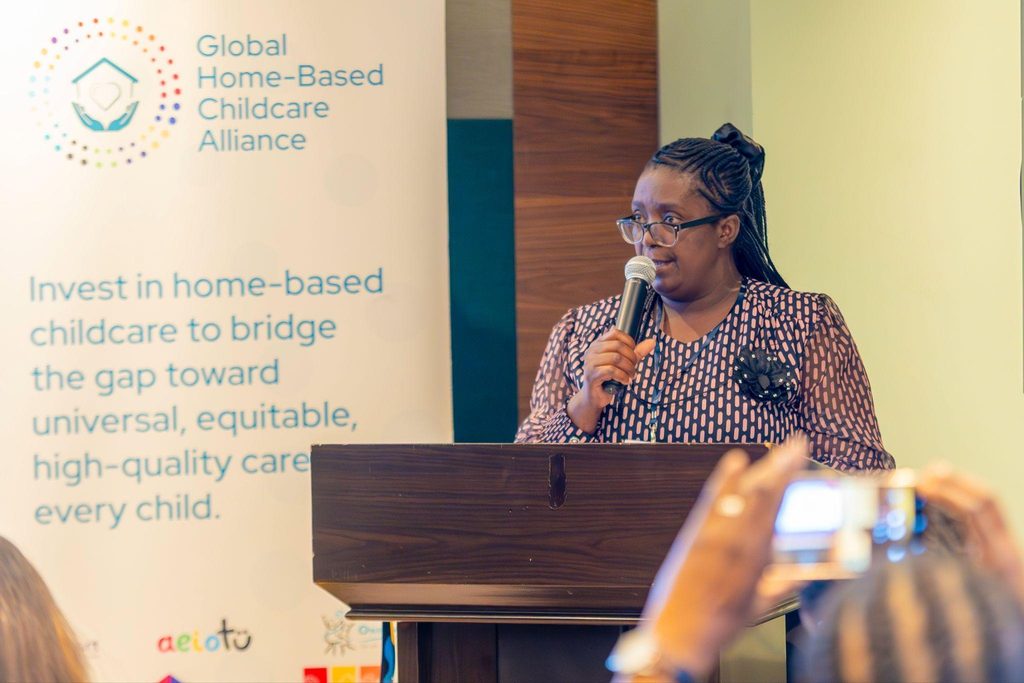
Patrine Banda, Ministry of Education, Zambia
Banda was equally clear that home-based childcare is not a stopgap, but a critical site of child development. “If these childcare centres or home-based care is not well taken care of,” she said, “we risk raising children that will not even reach their full potential.”
What Comes Next
In 2026 and beyond, the Alliance is focused on four priorities:
- Synthesising cross-country evidence and models into a shared knowledge base;
- Developing a global advocacy strategy;
- Expanding its membership to additional geographies; and
- Initiating fundraising to sustain and scale its mission.
The Alliance’s role is not to implement programmes, but to build the global enabling environment that allows national-level systems — governments, civil society organisations, and communities across every continent — to recognise, finance, and support home-based childcare.
Gacheri Njogu-Ndongwe closed the launch with a call that echoed its opening words:
“We can support millions of home-based childcare providers and early educators to emerge from the shadows, so they can actually come and be supported and supervised by the government. They deserve access to public services, to civil society programmes, to financial support, to continue their vital work for communities around the world.”
— Gacheri Njogu-Ndongwe, CEO, NurtureFirst
| Get Involved If you work in early childhood development, education policy, women’s economic empowerment, or development finance — and you believe home-based childcare deserves to be valued and financed — the Alliance wants to hear from you. Join the Alliance by emailing us: alliance@nurturefirst.org. Check out the Alliance’s website and sign up for updates Follow the Alliance: LinkedIn You can also catch the Alliance in person next week. We’re hosting a side event during UNGA week, “Putting Home-Based Childcare on the Global Agenda,” on Thursday, September 24, 2026, from 9:00 to 10:30am ET in New York. We’ll be diving into the evidence base and making the case for why home-based childcare belongs on the global agenda. Register to join us here. |